
February 5, 2026
Anthropic, S&P 500, AI
By Mark Lacey
Contextual Engineering and the Rise of Temporal Knowledge Graphs: How Enterprises Tackle Context, Memory, and Hallucinations

Every enterprise exploring AI runs into the same wall: models can chat, summarize, and generate—but they don’t remember like your business does. They miss the nuance of “what changed, when, and why,” they forget past interactions, and when context gets thin, they fill the gaps with confident fiction. That’s the heart of the hallucination problem—and the reason contextual engineering has become a must‑have capability, not a nice‑to‑have.
Contextual engineering is the discipline of designing how information is created, structured, retrieved, and fed into AI systems so that answers are grounded in the right evidence at the right time. At the center of this practice sits a powerful idea: temporal knowledge graphs—a living, time‑aware map of your organization’s data, decisions, and relationships.
Why static RAG isn’t enough anymore
Retrieval‑augmented generation (RAG) was a major step forward, but it treats knowledge as snapshots. Most enterprise reality is anything but static: policies change, org charts evolve, customers move, product specs update, and decisions unfold over days or months. Without understanding when relationships formed, changed, or expired, even the best RAG setups fetch “almost right” context that leads models astray.
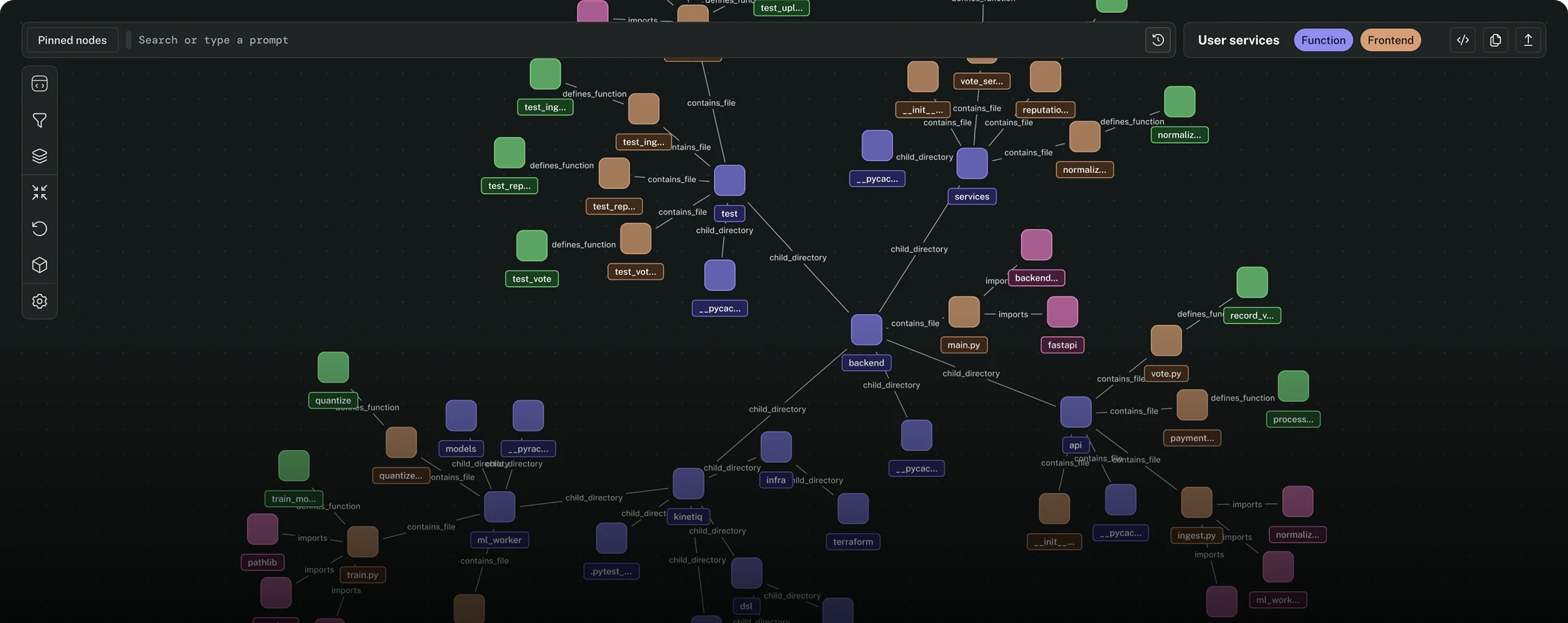
Temporal knowledge graphs fill that gap. Instead of a flat index of documents, they structure entities (people, products, policies, assets), the relationships between them (reportsTo, governs, dependsOn), and—crucially—how those relationships evolve over time. Each edge can carry validity windows and provenance, so your AI can answer not just “what’s true?” but “what was true at a specific moment—and how did it change?”
What makes a knowledge graph “temporal”
A temporal knowledge graph tracks at least two notions of time:
Valid time: when a fact or relationship was true in the real world (e.g., a refund policy that changed on May 1st).
Transaction time: when the system learned or recorded that fact (useful for audit and compliance).
This bi‑temporal design lets you run queries like “What policy governed premium refunds in Q3 last year?” or “Which supplier relationships were active during the recall window?” That’s the kind of question static RAG can’t reliably answer—yet it’s the kind enterprises need for accuracy, accountability, and risk management.
How temporal graphs solve the big three problems
Context gaps
Tacit knowledge hides in emails, tickets, meetings, and change logs. Temporal graphs stitch these signals together into decision trails: inputs → reasoning → outcomes. An agent resolving a support case can traverse a chain of prior tickets, product version changes, and policy updates to deliver a response that reflects institutional memory, not just today’s documentation.
Memory limitations
LLMs operate within finite context windows and forget earlier details. With a temporal graph as a durable memory layer, agents can externalize long‑term memory: summarizing sessions into “episodes,” linking those to entities (accounts, orders, assets), and retrieving only the relevant subgraph when needed. That keeps prompts compact while preserving depth—and makes memory consistent across agents and channels.
Hallucinations
Models hallucinate when evidence is missing or ambiguous. Temporal awareness reduces the need to guess. Edges carry validity periods and sources, so the system can favor authoritative, time‑appropriate facts and flag contradictions. If the record is silent, the agent can say so—with a pointer to what would be needed to answer confidently.
Real‑world scenarios
Customer operations: A premium customer’s entitlements changed after a contract amendment last quarter. The agent checks the graph’s timeline, sees the amendment’s effective date, and applies the correct benefit tier—no more “We’re sorry, that’s not covered” when it actually is.
Compliance and audit: An internal policy shifted during an incident response. The graph preserves who approved what, when the policy took effect, and which cases used which version—turning audits from forensic puzzles into straightforward queries.
Supply chain and manufacturing: A component spec update cascades through BOMs, work orders, and quality checks. The graph propagates impact over time, helping teams identify which lots require rework and which are unaffected.
Finance and risk: Market signals, counterparty exposures, and approvals are tracked as evolving relationships. Scenario analysis compares “what we believed then” vs. “what we know now,” improving attribution and forward planning.
A reference architecture that works
Event ingestion: Capture changes as events (contractSigned, policyUpdated, assetDeployed). Normalize these into entities and edges with timestamps and provenance.
Ontology and schemas: Define a lightweight, extensible domain model: entities, relationship types, constraints, and process ontologies (e.g., nextStep, governedBy, approvedBy). Start small; evolve as patterns stabilize.
Bi‑temporal storage: Use a graph store or hybrid approach that supports valid and transaction time. Index by entity, relationship, and time intervals for fast temporal queries.
Vector + graph retrieval: Pair embeddings with the graph. Vectors locate semantically relevant content; graph traversal validates relationships and time windows before answers reach the model.
Memory compaction: Summarize long interactions into episodic nodes linked to entities, preserving key decisions, rationales, and metadata. Prune or compress with policies to control growth.
Guardrails and provenance: Attach sources, confidence scores, and lineage to edges. Require the model to cite graph nodes or documents when responding. Prefer saying “unknown” to guessing.
Privacy and governance: Tag PII and sensitive attributes; apply role‑based access at the node/edge level. Support right‑to‑be‑forgotten workflows with tombstones and compensating summaries.
Implementing in phases
Identify high‑leverage journeys
Pick one or two processes where hallucinations or memory loss are costly—claims appeals, high‑value support, change management, or vendor onboarding.
Map entities and timelines
Model the core entities and the events that connect them. Define what “truth over time” means for each relationship: effective dates, expirations, approvals, and superseded states.
Seed the graph with authoritative sources
Start with contracts, policies, product catalogs, and key tickets. Add event streams from operational systems. Keep ingestion explainable with clear provenance.
Integrate retrieval into your prompts
Wrap your models with retrieval functions that: a) find relevant subgraphs; b) assemble time‑appropriate facts; c) render compact, structured context; and d) enforce citation and fallback rules.
Measure and iterate
Track accuracy lift (fewer escalations and reversals), handle‑time reduction, audit cycle time, and the percentage of answers with verifiable citations. Expand the ontology only as new use cases demand it.
What “good” looks like by quarter
0–90 days: A pilot agent answers with citations, respects policy effective dates, and reduces back‑and‑forth in a targeted workflow.
90–180 days: Multi‑team adoption; shared ontologies cover core entities; measurable drops in rework and escalations; audits move faster.
6–12 months: The graph becomes the organization’s living memory for key decisions; agents compose insights across departments with less human stitching and fewer hallucinations.
The strategic payoff
Contextual engineering is not just prompt craft—it’s the operating system for enterprise AI. Temporal knowledge graphs give your agents a spine: a consistent, evolving memory that mirrors how your business actually works. With time‑aware context and verifiable provenance, AI stops guessing and starts reasoning—reducing risk, accelerating decisions, and compounding value every time your teams learn something new.
If your AI roadmap still treats knowledge as a static index, now’s the moment to upgrade. Make time a first‑class citizen in your data, and your agents will finally behave like the trusted colleagues you need them to be. Contact PM2 Net fro a free strategic AI plan that includes our Contextual Engineered layer.